Swedish activist criticised world governments for their failure to prevent environmental breakdown
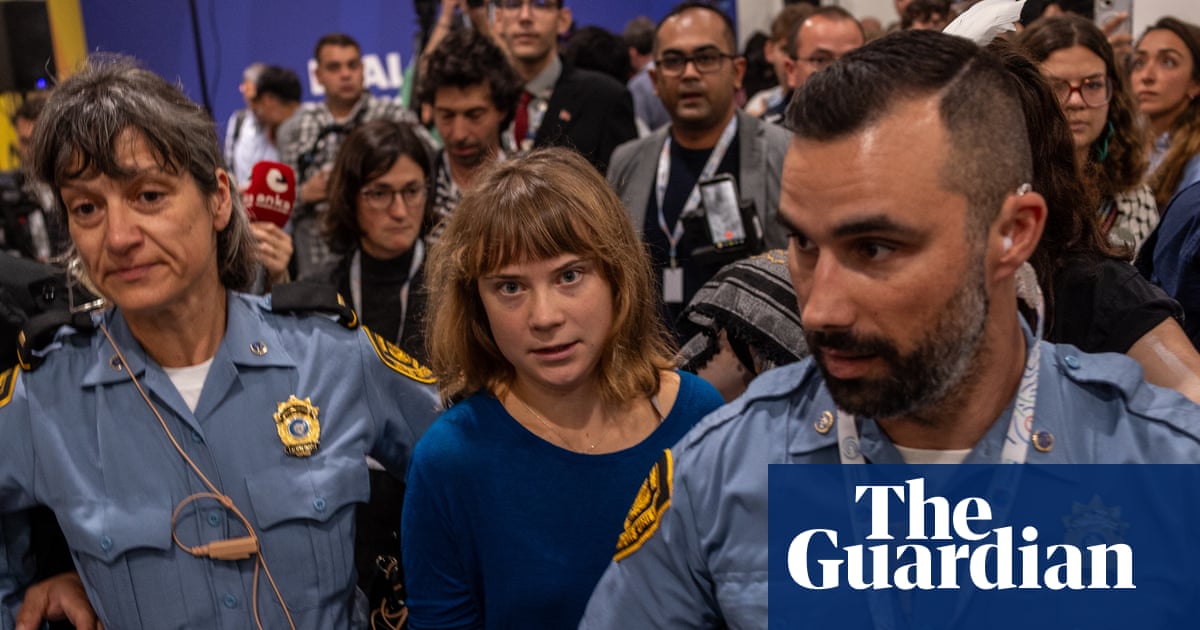
The planet is “not dying, it is being killed and we know by who”, said Greta Thunberg, who excoriated world governments for their failure to prevent environmental breakdown in her first appearance at the annual UN climate talks in five years.
Thunberg, 23, the Swedish activist who became famous for heading the school climate strike movement, delivered her stark message to those gathered at the Cop31 summit in Antalya, Turkey, amid the ongoing failure by countries to adequately address the climate crisis.
“It [Earth] is being killed by the very same people thought to come to our rescue,” Thunberg said.
“No one is coming to our rescue. When our human rights are being threatened by states and other institutions, it’s our duty to stand up and be the adult in the room and fight for everyone’s human rights.”
Thunberg, who in recent years has shifted her focus towards other areas such as the conflict in Gaza, linked worsening global heating to other calamities such as war in an appearance alongside activists from Nepal, Canada and Australia.
“We are heading towards a future of more genocides and more ecocides and the complete compromise of our basic rights and where basic necessities become luxuries,” she said.
“It’s more clear than ever in spaces like these that the situation could not be any less under control. The planet is not dying, it is being killed.”
The intervention, on the fourth day of the two-week summit, came as world leaders who travelled to the Mediterranean coastal city delivered their own verdicts on the climate crisis and the faltering progress to address it.
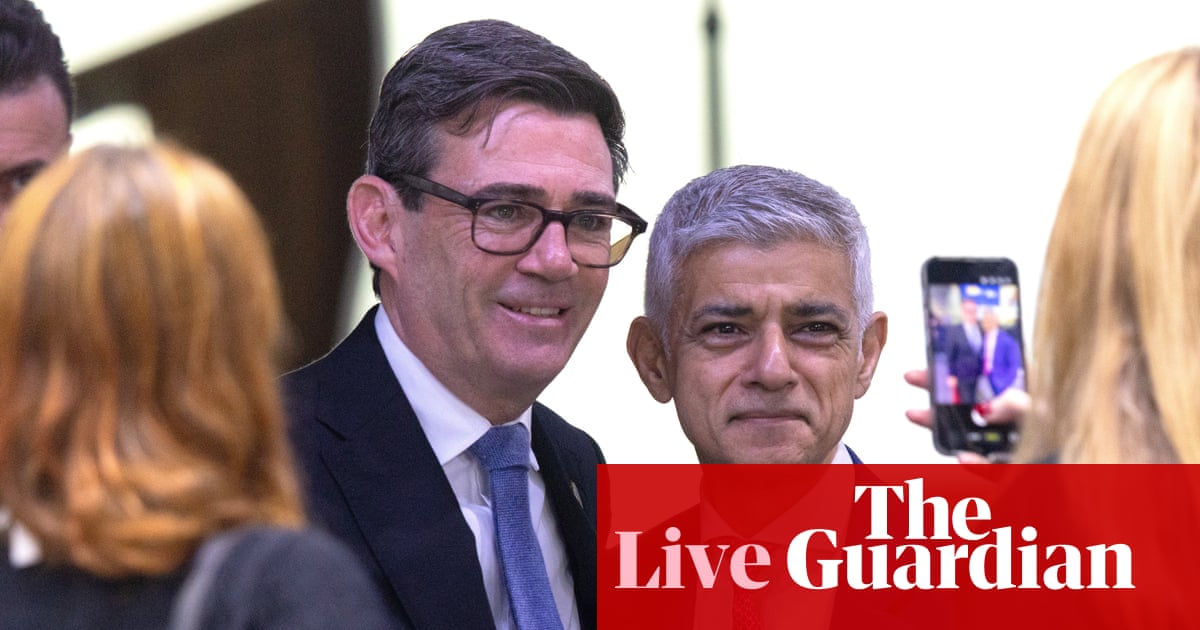
Andy Burnham, the British prime minister, who was the only G7 leader to attend the talks, said in a speech that the record hot summer in the UK was “not normal”.
“The climate crisis is not a distant threat; it is upon us all now, devastating lives and livelihoods everywhere,” said Burnham, who promised the UK would get to net zero emissions, and backed a proposal for countries to further electrify their economies.
Beth John, a climate justice adviser at Oxfam GB, said Burnham’s appearance “sends a positive signal”. But she added: “Showing up is not enough: a crisis of this scale needs substantive action, not just signals. The real test of climate leadership is delivery, not declarations.”
The electrification goal is one of the main potential promises expected at the talks, which are being jointly presided over by Turkey and Australia. Some countries want the agreement text to specify that the electricity will be derived from clean energy sources.
Campaigners have criticised governments for their slow pace of emissions cuts and for, so far, failing to rally around a phaseout of fossil fuels in the negotiations.
Current policies are set to heat the planet by 2.7C by the end of the century, a report by Climate Action Tracker found on Thursday. The catastrophic rise in temperatures is slightly more than the group expected last year and well above the 1.5C that world leaders have promised.
Thursday was rife with accounts of the harm caused by the climate crisis. Gita Chaudhary, Nepal’s environment minister, recounted the disastrous landslide – caused by a melting glacier – that struck the country in August, claiming more than 1,500 lives.
“We call the catastrophic climate change event we suffered a mountain tsunami,” Chaudhary told the Guardian. “We lost people, we lost lives, we lost property. Nepal is working for rehabilitation, reconstruction and rebuilding the infrastructure. But the communities, the culture, the lives, we cannot revive.”
In the main conference room, a speech by Mohammad Mustafa, the prime minister of Palestine, drew a standing ovation from delegates as he described the environmental impact of the three-year war with Israel.
“Israel’s restrictions on access to land, water and natural resources have compounded Palestine’s climate challenges,” said Mustafa, who spelled out how widespread destruction in Gaza, including to water supplies, sewerage and farmland, had worsened environmental and health risks.
The Turkish hosts of Cop31 have repeatedly accused Israel of genocide and refused to invite the country’s leadership to Antalya. Israel denies that it has committed genocide and insists it has fought a legitimate war to safeguard its own security.
Another country not formally present at the talks is the US, which did not send a delegation. Donald Trump has withdrawn the country from the international climate framework, derided climate science as a “hoax”, and claimed he would not permit any new wind turbines.
This stance earned a rebuke from John Kerry, the former US secretary of state, who has made the trip to Turkey along with 20 Democratic members of Congress and two state governors. “He’s the biggest loser we’ve seen in a long time on all of these issues,” Kerry said of Trump in response to a question from the Guardian.
The crushing midterm election win by the Democrats has raised hopes here at Cop of the US re-engaging on the climate crisis. But Gavin Newsom, the governor of California, warned the final two years of the Trump presidency would not see fundamental change on climate policy.
“I don’t want to romanticise what this will mean,” Newsom said on Thursday. “I don’t expect they’ll do anything but double down.”