
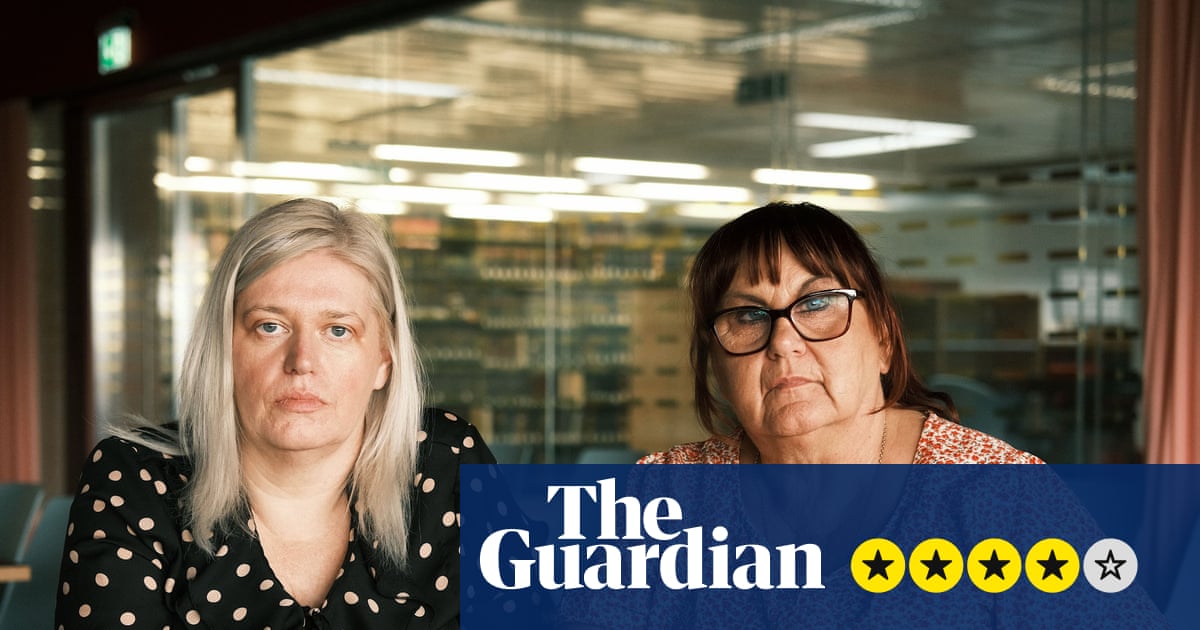
Janet Williams and Emma Murphy both had children with disabilities, then started doing some digging … and uncovered a jaw-dropping medical fiasco that rivals thalidomide. Long may they fight!
Tales of corporate or governmental wrongdoing are often hugely complicated. Documents destroyed, witnesses untraceable, endless obfuscations and legal intricacies invoked. If the people doing the uncovering are ordinary folk, unarmed with fancy lawyers or untrained in the ways of big business or statecraft, the story often becomes even more of a switchback ride before the mind-boggling whole is laid bare.
Just occasionally, however, the story is very simple (though no less mind-boggling). Such a case is that of the sodium valproate scandal, uncovered thanks to a campaign that was started 17 years ago by two mothers who began to suspect that their children’s disabilities had a specific cause.
Janet Williams had two sons with developmental delays. For years she was told by doctors that there was nothing wrong: “You truly believed that if there was something wrong or something that needed explanation, they would tell you,” she says now, remembering her naive younger self and her trust in the medical profession. Then, in 2009, the boys were referred to a specialist who almost casually informed her that their condition was probably a result of her epilepsy medication, Epilim. It was the brand name for sodium valproate, discovered in 1962 to be an effective anti-seizure drug, and also used to treat bipolar disorder. By the time Williams was having her children in the 1990s, it was one of the most widely prescribed treatments for epilepsy in the UK.
Williams started distributing leaflets in her home town of Pilling, Lancashire, telling her story and asking other potentially afflicted families to get in touch. They did. They had questions she couldn’t answer, so she started researching everything she could at Manchester Central library. Then she made the news and Emma Murphy from nearby Bury, five of whose children (out of six) had similar difficulties to Williams’s after exposure to Epilim, got in touch. To Murphy’s continuing amusement – “I’d just been reading women’s magazines and sitting at home watching Coronation Street!” – they began putting together evidence that would eventually reveal a scandal to rival thalidomide in scale and suffering.
Alongside the mothers’ story runs that of Prof Jill Clayton-Smith, a clinical geneticist working in Manchester in the mid-90s, who began to notice a recurring cluster of features among the children born to women treated for epilepsy. She investigated further and presented her findings – including a 1984 US paper describing “foetal valproate syndrome” – at a conference. “It wasn’t received as well as I’d hoped,” she says delicately. The male-dominated audience essentially scoffed at her “anecdotal” data and ignored it. Prof David Chadwick, however, encouraged her to embark on a formal study that could not be refuted. Williams’s children would become part of it and it would eventually help determine that sodium valproate carries a 10% risk of causing physical malformations and a 30-40% risk of causing serious neurodevelopmental disorders in those exposed. The drug is estimated to have affected 39,399 babies since the risk was first identified.
In 2011, Murphy, Williams and 138 other families were undertaking a class action suit against the drug manufacturer Sanofi Aventis. Excitement and hope were building when suddenly their legal aid was withdrawn after they were deemed unlikely to succeed, and lawyers formally discontinued action.
By 2013 they had regrouped and began investigating the apparent regulatory failure in licensing the drug for use by women of childbearing age. They had several futile meetings in Westminster. “We were referred to as ‘bored, hysterical housewives’,” says Murphy. Williams remembers an official turning to her to ask if she understood what a word meant. She did. “The way they dealt with us was sickening … But it drove me on.”
They started secretly recording the meetings. We hear audio of someone saying: “The neurologists weren’t in favour of having this acknowledgment of risk … Doctors don’t like being told what to do,” and suggesting that patient warnings on packaging weren’t necessary because people could find the information on the internet if they wanted – “Your Facebook site’s great!” “The ignorance,” says Williams. “The arrogance.” “Bastards,” murmurs Murphy.
The thalidomide campaign team advised them to go to the National Archives at Kew and look for the meeting notes from the Committee on Safety of Medicines (CSM) when the drug came on the market. In 2015 they found the smoking gun: the CSM’s response to Sanofi’s statement to them that the drug was harmful to foetuses. To warn about this, it said, would cause women “fruitless anxiety.” So nobody was told anything. This is where medical misogyny, a cancer in the system that corrupts everything it touches, inexorably leads.
There was a government review, there was handwringing, there was the promise two years ago of state compensation. There have been no payments yet to the estimated 20,000 families affected by the drug. But bored, hysterical housewives never give up. God bless them, and damn the rest.