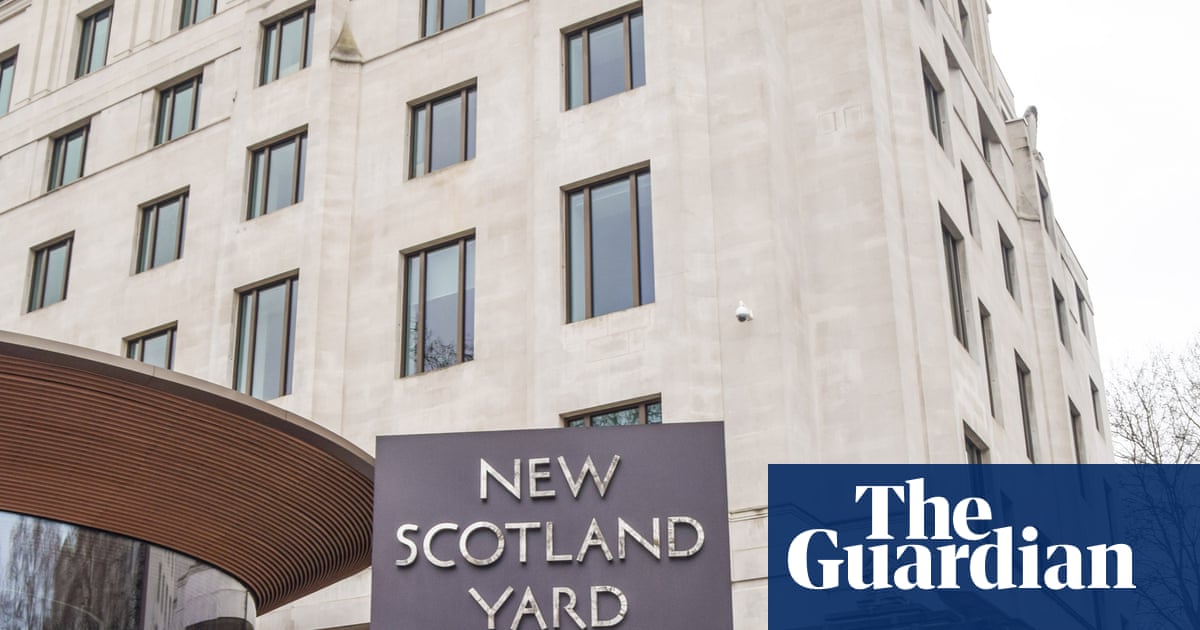
Tej Singh Bhandal, 68, was pulled from a queue and detained under terrorism law in ‘creeping criminalisation of protest action’
The Metropolitan police have settled a claim brought by a 68-year-old pro-Palestinian activist who accused the force of treating him “like a criminal” when he was arrested under anti-terrorism legislation.
Tej Singh Bhandal was returning to the UK on Eurostar this year when police pulled him from a queue at St Pancras International station in London.
After refusing to give authorities the pin code to his mobile phone, he was arrested and charged under schedule 7 of the Terrorism Act 2000, he said.
He spent several hours in police detention, and brought a legal challenge over his arrest. The Met has agreed to settle the claim and close the criminal investigation against him, the Press Association reported.
Bhandal’s lawyers said Scotland Yard accepted that supporting and funding lawful political protest organisations – naming the BDS (Boycott, Divestment, Sanctions) movement and the Palestine Solidarity Campaign – did not automatically establish a link to terrorism.
The Met police has apologised to him and is carefully reviewing the circumstances of the case.
Bhandal described his arrest as “incredibly humiliating” and “an abuse of power”.
“I was handcuffed and led through the station in full view of the public. I felt like the tabloid newspaper stereotype of a person of colour, and I was treated like a criminal,” he told the Press Association.
Bhandal, who is involved with the Palestine Solidarity Campaign, was previously arrested in 2025 as part of a police investigation into a Palestine Action-linked incident at the Elbit Systems factory in Bristol.
He was questioned by counter-terrorism police over four days, during which his house was searched and his devices seized, but was released with no further action taken.
He believes an “intelligence flag” was placed on his name after the incident, leading to his arrest at St Pancras.
The Met’s decision to settle Bhandal’s claim came as more than two dozen protesters were arrested outside the supreme court on Wednesday morning while an appeal was being heard against the ban on Palestine Action.
He said people were being “singled out by the authorities for activism” and that “the creeping criminalisation of protest action is a consequence of government policy.”.
Commander Helen Flanagan, head of counter-terrorism policing London said: “We accept that an examination of a 68-year-old man under Schedule 7 to the Terrorism Act 2000, on 2 June at St Pancras station, and his subsequent arrest, did not meet the requirements of the legislation. We have apologised to the individual concerned over this.
“Schedule 7 is a key power in protecting the borders of the UK and remains a vital tool in our efforts to counter the terrorist threat and keep the public safe.
“We will carefully review the circumstances of this case and take forward any lessons learned to ensure these powers are exercised lawfully, effectively and in a way that means the public can have confidence and trust in the work we do.”
Alex Kenney, a civil liberties lawyer at Hodge Jones & Allen, which acted for Bhandal, said “adequate safeguards” were essential to prevent the “arbitrary” use of anti-terrorism laws.
“Our hope is that Tej’s case leads to more stringent adherence to the statutory obligations under the Terrorism Act and changes how the police conduct themselves in future,” she said.