The parties could have, for once, done something innovative in Australian politics and pledged to make no deals with One Nation
Get our daily political email, free app or daily news podcast
It’s become the new normal in Australian politics.
Pauline Hanson’s One Nation carnival comes to town for an election and all eyes in Australia’s political and media establishment follow.
Nothing wrong with that. A keen interest in the hard-right party’s fortunes in this month’s Victorian election is only natural. A decent showing from One Nation when the state votes on 28 November will have consequences well beyond Victoria’s borders.
This is a major test of whether Hansons’s disruptors can convert their remarkable surge – from 6% of the national primary vote at last year’s election to as high as 28% support in some recent polls – into a serious parliamentary presence.
Sign up for Guardian Australia’s Politics, really newsletter here
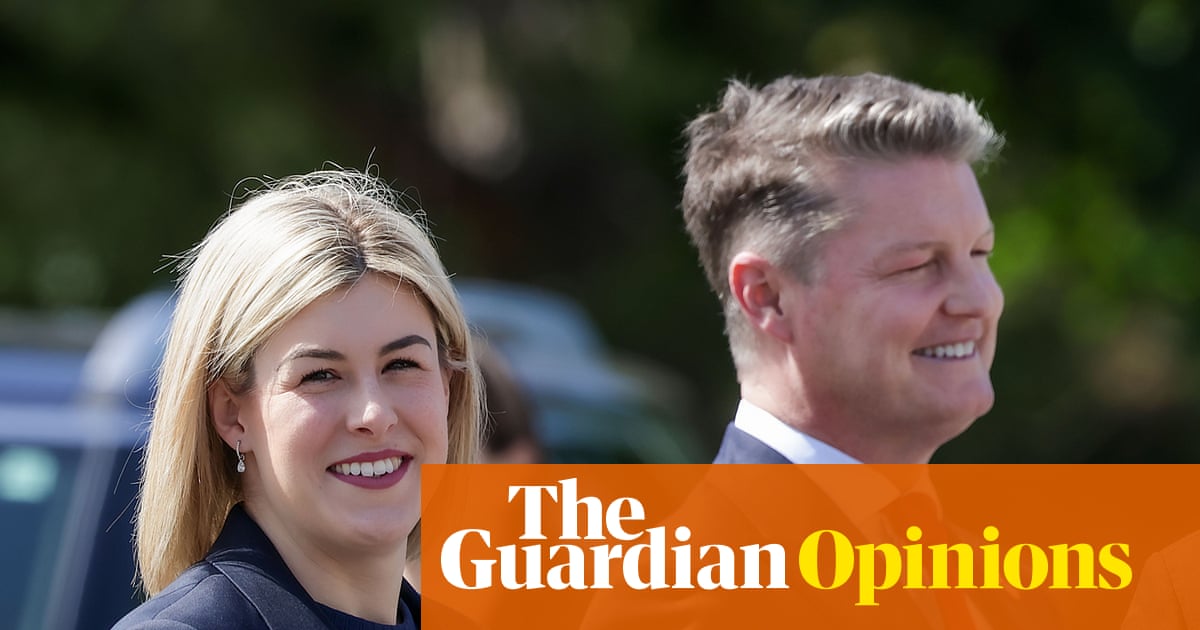
The most recent polling points to a decisive win in Victoria by a newly disciplined and focused Coalition under relative newcomer Jess Wilson, over a desperately tired 12-year-old Labor government, led by last-minute fresh face Ben Carroll.
Those same polls suggest One Nation’s popularity may have peaked and softened into the low-to-mid 20s in the public polls and to just 14% according to the Greens’ research.
On those numbers Wilson will avoid the nightmare scenario; being forced into a minority government, propped-up by a bloc of One Nation MPs in the state’s lower house.
But even a widely tipped Coalition majority might be unable to escape an orange tinge.
A substantial One Nation presence in the state parliament’s upper house looks a near certainty, with even internal Greens polling suggesting the capture of five or more of the 40 seats in the Legislative Council quite doable for Hanson’s party.
This would mean a hung chamber, with the balance of power split between Greens and One Nation MPs.
A Wilson government, unlikely to get any joy out of the Greens, would have to do business with Hanson’s people to get its legislation passed and shouldn’t expect to get anything for nothing.
The Liberals and Nationals like to paint the Greens as extreme, but just wait until the Coalition has to cut a deal with someone like Mark Nicholson, one of One Nation’s upper house hopefuls.
He’s the individual behind that cartoon mocking Jackie Lambie’s struggle with vaginal prolapse and who wants former Labor premiers Dan Andrews and Jacinta Allan jailed.
Who’s to say what One Nation’s leader in Victoria, Warren Pickering, who sees nothing extreme about white replacement conspiracy theories, might want in return for waving through a Coalition government’s legislation.
One Nation’s anti-abortionists and anti-vaxxers would have a wealth of proposals for an incoming Victorian health minister and the party’s climate deniers would be licking their lips at the prospect of wrecking years of progress on emissions reduction and renewable energy.
Initiatives like Safe Schools, harassment-free zones around abortion clinics, Melbourne’s medically supervised injecting room, voluntary assisted dying and more would all likely be in One Nation’s sights too.
The Liberal pledge to scrap the state’s treaty with its First Nations people is unlikely to go far enough for One Nation, given Hanson described Indigenous Australians as the “most primitive race on Earth”.
Wilson’s approach to the threat on her right has shifted as the campaign has taken shape, from trying to pretend that One Nation didn’t exist, to a form of normalising behaviour, directing preferences to One Nation’s candidate above Labor on how-to-vote material.
Carroll, meanwhile, is trying to tie the Coalition in voters’ minds closely to Hanson’s party, but the Labor leader isn’t getting much joy there. His polling continues to slide.
Those respective strategies are straight out of the major parties’ politics-as-usual playbook, showing that Carroll and Wilson don’t understand, or can’t acknowledge, the new political reality.
The two leaders have missed a historic chance to show they understand the scale of the hard-right threat.
The parties could have, for once, done something innovative in Australian politics and pledged, along with the Greens leader, Ellen Sandell, to make no deals with One Nation.
Cooperating across tribal lines might not compute in the brains of these Australian politicians, but such agreements have endured, however imperfectly, in other democracies, most famously Germany.
Hanson and her party would play their accustomed part as victims of an establishment stitch-up, but what would be new about that?
At the very least, a cross-party agreement to keep One Nation out of government decision-making would show that the traditional parties don’t have to be rabbits in the headlights of an oncoming far-right road train.
As for the watchers beyond the state’s borders – well, that would give them something to talk about.
Noel Towell is a Melbourne journalist, writer and former Victorian state political editor