Parents take action while independent bookshops say they had already stopped stocking his titles
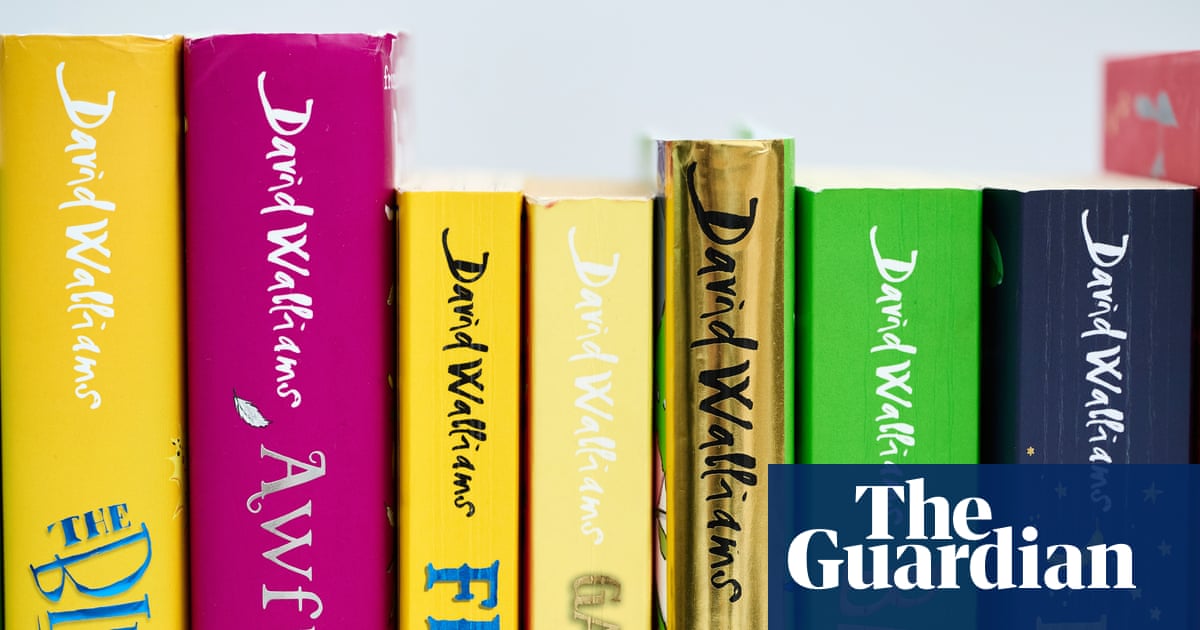
In Sarah’s house, David Walliams has been a bedtime staple for years. Her children, aged eight, six and four, have dressed up as his characters for World Book Day – they love the over-the-top, unusual names and illustrations.
Now, all the books are going. “I’ll probably take them away and replace them with other authors,” says Sarah, a mother in west London. “Sooner rather than later, so they don’t realise.” If any of her children ask why, she will tell them “that his choices aren’t great and that I think we should be reading other books”.
This week a joint Guardian and ITV News investigation alleged that the children’s author used his position to pursue young women and girls for sex, including girls as young as 15. Walliams denies the allegations. HarperCollins stopped publishing new Walliams books last December and dropped his entire backlist in September.
For many independent children’s booksellers, the news only confirmed a decision made long ago. Helen Tamblyn-Saville, owner of Wonderland Bookshop in Retford, Nottinghamshire, stopped stocking him in 2020. “They didn’t fit the ethos and values of my shop,” she says. Walliams “punched down”, she believes, citing what she sees as “themes of racism, misogyny and classism” in his books.
In 2021, HarperCollins removed a story about a Chinese boy, Brian Wong, Who Was Never, Ever Wrong, from future editions of The World’s Worst Children after complaints that it relied on harmful racial stereotypes. In 2025, Tamblyn-Saville turned down an event with him. “It feels very much as if the golden goose had to be protected, despite the clear red flags.”
Griffin Books in Penarth, south Wales, dropped his books about 18 months ago over “the low quality of the writing and his frequent use of offensive stereotypes”. The Chicken and Frog bookshop in Brentwood, Essex, has not stocked him for a decade. Urmi, owner of Pickled Pepper Books in north London, has a blunter opinion: “We heard [rumours] about David Walliams at least five years ago and at that point chose to not stock his books,” she says. She believes that “everyone in the industry knew … so anyone that’s only just taking books off the shelf is only interested in profit”.
Mainstream stores have moved quickly. The Works, a budget retailer, said it had removed all David Walliams titles from sale and TG Jones confirmed it no longer sold his books in store or online. Waterstones said it was talking to HarperCollins about returning “the small number of copies which remain in stock in a few of our shops”.
Families are clearing their shelves too. One parent walked past a neighbourhood book-swap box this week and found it stuffed full of Walliams titles. Another mother joked that she would be burning hers, saying Walliams was “a knock-off Roald Dahl anyway”. Sarah hasn’t decided what to do with hers: giving them to a charity shop just puts them “back into the system”.
Walliams’ sales have been falling sharply – but they have not disappeared. Retailers sold 7,497 Walliams books over the past four weeks, worth £48,400, according to NielsenIQ BookData figures reported by The Bookseller. In the same period last year, when he had a new book out, Walliams sold 102,000. Even so, almost 108,000 copies of his books have been sold so far this year, worth more than £702,000, and his titles have made more than £153m since 2008.
Public libraries are also facing a difficult decision. “This is a very sensitive issue involving deeply disturbing allegations, and some people may find the continued presence of these books upsetting,” said Isobel Hunter, CEO of the charity Libraries Connected.
“But we also have a long-established legal principle within the sector that all books should be available to the public unless the content itself is unlawful. So most library services have said that the books will remain in their collections until they are naturally weeded out and withdrawn under existing stock policy. That doesn’t mean, of course, that libraries are obliged to promote them or have them on display.”
Anecdotally, she said, demand had “dropped significantly in recent years”.
Some schools appear to be taking a harder line – several teachers told the Guardian they were removing Walliams books from their classroom shelves.
For Sarah, the principle is simple: “Kids need to understand that actions have consequences. If something’s not right, then we need to act upon it.”