Creation of Sport Org sparks disquiet at governing bodies
Smaller sports concerned they might be taken over
The leaders of Britain’s Olympic and Paralympic sports have been responsible for some of the country’s greatest successes over the past two decades. But there are changes afoot that are increasingly ruffling feathers and stoking fears.
Most people will not have heard of Sport Org, the organisation recently set up by UK Sport. Essentially, it evolved out of British Curling, and now uses its leaders and expertise across curling, para-curling, para table tennis, squash and, from 2030, bobsleigh and skeleton.
Far more controversially, UK Sport also wants Sport Org to take over GB Snowsport’s high-performance programme and be responsible for spending £12.5m of lottery funding in the run-up to the 2030 Winter Olympics.
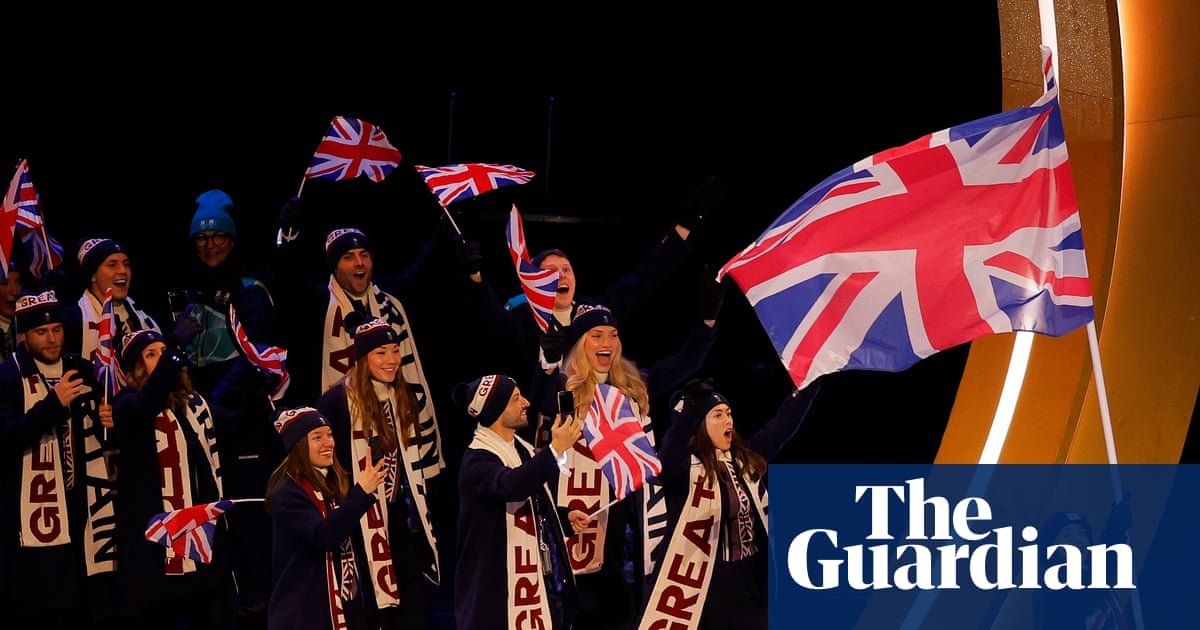
That, according to one observer, is part of an “all-out war” between UK Sport and GB Snowsport, which left the Milan-Cortina Winter Olympics with two of Team GB’s five gold medals, and believes it should remain in charge of the elite part of the sport.
Meanwhile the Guardian can reveal that Sport Org’s creation has caused such confusion and speculation that on Friday UK Sport’s chief executive, Sally Munday, held an unprecedented 75-minute video conference with the chief executives and chairs of every Olympic and Paralympic sport to address their concerns. “I think the best rumour I’ve heard so far has been that UK Sport is intending to put all sports into Sport Org,” she told them. “For the avoidance of doubt, that is a million miles away from the truth.”
Instead Munday and UK Sport’s deputy director, Simon Morton, stressed the benefits of the new organisation and how it would drive efficiencies in spending and enable greater access to performance expertise. Not everyone was convinced, however.
When the call came for questions, the head of one national governing body said they initially feared that Sport Org would be “a bit like Ofsted”, and it would swoop in if it wasn’t impressed with a sport. Munday insisted that was not the case. “There is no intention for us to swoop,” she said. “We’re not imagining a world where the majority of sports end up in Sport Org.”
UK Sport was also asked why the chief executive role at Sport Org, held by the former head of British Curling Nigel Holl, had not been advertised – and why its board wasn’t reconstituted, “which is quite unusual from a governance perspective”.
To the surprise of some, it was Holl who answered the question and not UK Sport.
Since the meeting, the Guardian has spoken to more than half a dozen sports leaders. And while some praised Munday for addressing certain issues, the majority said the video conference had only scratched the surface of people’s concerns or had “raised more questions than it answered”.
“One or two of the chairs think it is a good idea,” one chair of a national governing body told the Guardian. “But generally people are either shit-scared that they will be next, or they haven’t got the bollocks to stand up to UK Sport.”
Some smaller sports fear they might be taken over by Sport Org, even if they believe they will have more success with their own elite staff who have been in the sport for years. “What can curling performance staff really teach us about swimming, say, or archery?” added one chief executive.
Another chair said that the dispute between UK Sport and GB Snowsport was also playing on people’s minds. “Picking a fight with snowsport is madness given they have just won a bucketload of medals at the Olympics and have brought in a load of commercial income,” they added.
Asked whether he would put his name on the record, he replied: “No, because there is an air of fear around this.”
That message was echoed by another chief executive who has doubts over Sport Org. “When UK Sport can pull the financial trigger you have to be careful,” they said.
|Others did agree with the need for efficiencies but wondered why UK Sport was focused on making them on the elite sport side and not, say, in legal, comms and HR, where sports could pool resources.
Of course there are two sides to every story, and UK Sport insists that in the case of squash and para table tennis, Sport Org has already demonstrated its value by enabling public funding to flow to those programmes.
During last Friday’s meeting, Holl insisted that efficiencies were also being made, and cited a sports coach who told him that Sport Org had saved him four hours a month because it had a better expenses claim system.
The Guardian asked UK Sport a series of questions about Sport Org, the criticisms made against it, and its dispute with GB Snowsport. It replied with a statement that said: “Sport Org is a specialist, independent, multi-sport organisation established to operate performance programmes on behalf of national governing bodies where it is felt that this can enhance the performance, efficiency and resilience of those programmes.
“The establishment of Sport Org is intended to strengthen the environments that surround British Olympic and Paralympic athletes, ensuring performance programmes have the expertise, resilience and resources they need to succeed,” it added.
“This is an important part of the bold reform we believe the UK’s Olympic and Paralympic system urgently requires to protect and enhance the competitive advantage of GB’s athletes.
“Sport Org will not replace national governing bodies, nor is it a model that would be appropriate for every sport. It provides an additional option where there is a clear rationale for doing so.”
However some still find it odd that Sport Org is essentially the organisation that was British Curling. Indeed its registered office address at Companies House is the National Curling Academy in Stirling.
Others wonder how truly independent Sport Org is from UK Sport, even though it has its own executive and board, and ask if it will be held to the same standards as every other sport.
“After the next Winter or Summer Olympics, every sport will be held accountable for its performance by UK Sport,” one attendee told the Guardian. “But for, say, para table tennis, UK Sport is going to be passing judgment on its own in-house programme. It is like asking Donald Trump whether he is a great president. Where is the independent scrutiny?”